50% off on product page · save $8.99
Fuel Efficiency vs Power: Choose the Right Balance
Start With Your Driving Routine
Begin with a typical week. How far is your commute? Do you spend most of it in stop-and-go traffic or at highway speeds? Consider the hills along your route, the number of passengers you usually carry, and the cargo you regularly load.
A short urban commute may call for easy maneuvering and good city fuel economy more than substantial horsepower. Frequent steep-road driving, on the other hand, can make extra capability useful. Even if you tow only occasionally, the vehicle still needs to handle the trailer and its load within its rated limits.
Focus on enough power for the task , not simply the highest horsepower number. A vehicle that meets your routine needs comfortably may offer a better balance than a more powerful version you rarely use to its full potential.
Compare Efficiency and Useful Power
In the United States, fuel economy is commonly expressed in miles per gallon, or MPG. Higher MPG generally means less fuel is used over the same distance. Compare city, highway, and combined ratings, giving particular attention to the one that reflects your routine.
Horsepower describes the rate at which a powertrain can do work; torque measures twisting force and helps explain pulling ability. Weight, gearing, and transmission behavior matter too. Ratings are a starting point, not a promise: weather, terrain, speed, traffic, and driving habits affect your results.
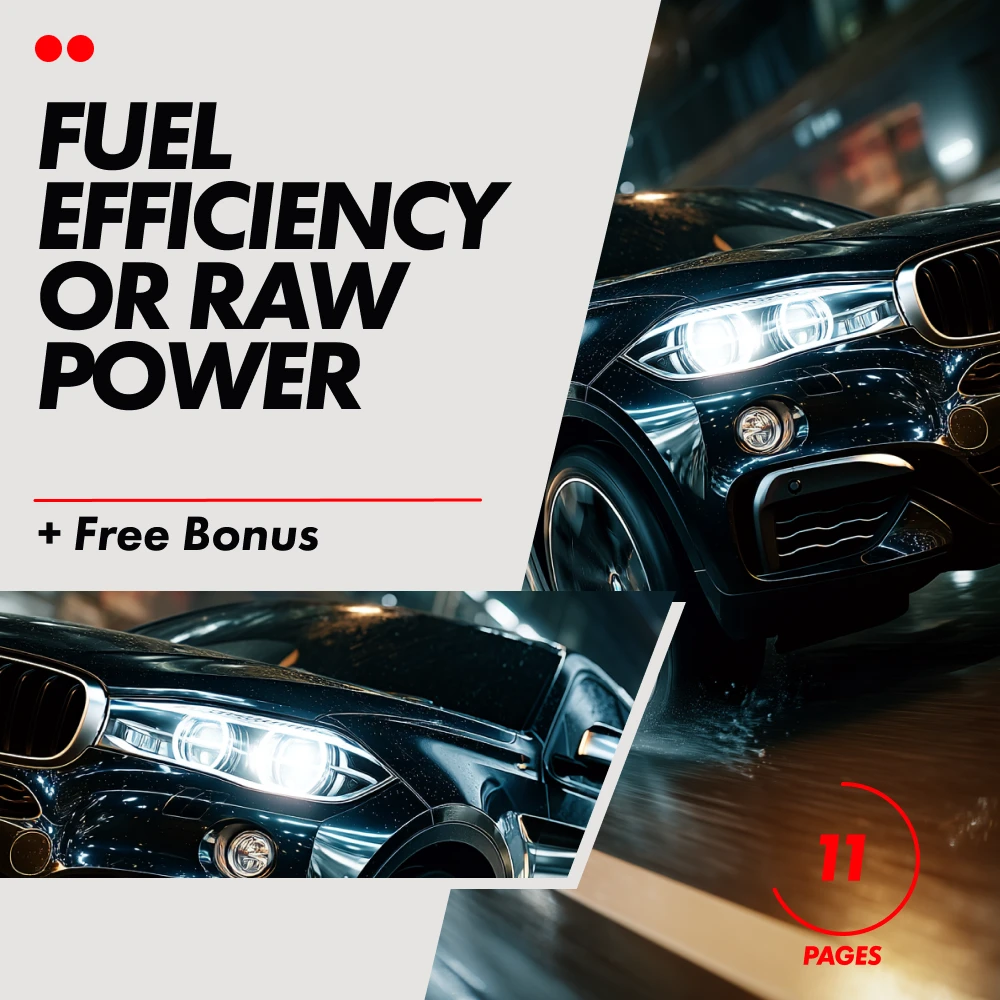
Fuel Efficiency Or Raw Power – A Practical Driving Guide Exploring fuel efficiency vs power which is more important for Real-World Vehicle Choices
View product
Match Your Priorities to Your Roads
- City commuting: Compare city MPG and look for smooth, adequate acceleration.
- Highway trips: Compare highway MPG and consider how confidently the vehicle merges and passes.
- Hills, loads, or towing: Compare similarly capable vehicles and check payload and towing ratings for your intended load.
Estimate the Cost of Fuel
Divide your expected annual mileage by the vehicle’s combined MPG, then multiply by your estimated local price per gallon. Your actual cost will vary.
Fuel is only one part of ownership. Compare purchase price, insurance, and expected maintenance too. A more efficient vehicle may save at the pump, but those savings can take time to offset a higher purchase price.
Test the Balance Before You Choose
Drive on roads similar to your regular routes. Include a safe highway merge and a hill when relevant, and notice whether acceleration and transmission response feel comfortable.
If you carry heavy loads or tow, check the manufacturer’s payload and towing limits for the specific vehicle configuration. Account for passengers and cargo within payload, and make sure the trailer and its load fit the applicable ratings. Engine output alone does not establish what a vehicle can safely carry or pull.
A Practical Guide for the Decision
Explore the guide before you narrow down your options, and use your own routes and budget to shape the decision.
If you are also planning household spending, our Smart Budget Upgrades That Boost Resale Value eBook offers a separate look at practical home improvement decisions.
Before choosing, compare the product details with your daily routine, available space, care needs, and preferred setup. The strongest option is usually the one that fits the intended use clearly and remains simple to clean, store, and check before repeat use.
It is also worth checking measurements, material notes, included parts, and compatibility details so the item matches the way it will be used after delivery.
FAQ
What is another word for fuel efficiency?
Fuel economy is a common term for fuel efficiency. In the United States, it is often expressed in miles per gallon.
Which mode is best for fuel efficiency?
Eco mode is generally designed to favor fuel efficiency, although its effect varies by vehicle and driving conditions. Consult your owner’s manual for how it works in your vehicle.
What is a good fuel efficiency rating?
A good rating depends on the type of vehicle and the capability you need. Compare city, highway, and combined MPG among similarly sized vehicles that can handle your usual driving and loads.
Is 60 mph more efficient than 70 mph?
Generally, driving at 60 mph uses less fuel than driving at 70 mph because aerodynamic drag increases with speed. Results vary by vehicle and conditions, and you should follow posted speed limits.
See if Fuel Efficiency Or Raw Power – A Practical Driving Guide Exploring fuel efficiency vs power which is more important for Real-World Vehicle Choices fits your setup
View product









Leave a comment