10% off on product page · save $1.44
Toddler Separation Anxiety: Calm Goodbyes That Help
Why Separation Anxiety Happens in Toddlerhood
Toddlers are developing a stronger awareness that caregivers can leave, but they still have a limited understanding of time. “I’ll be back in two hours” offers little comfort when a child cannot yet picture how long two hours will feel. Emotional regulation is also developing, so fear or sadness may quickly become crying, clinging, or a tantrum.
Protesting a separation does not automatically indicate insecure attachment or a parenting mistake. It may simply reflect a strong preference for a familiar caregiver. Reactions can intensify during daycare transitions, illness, travel, disrupted sleep, the arrival of a sibling, or other changes. Temperament and circumstances also affect how strongly and how long each toddler responds.
Common Triggers and Supportive Responses
| Situation |
What a Toddler May Do |
Gentle Response |
| Daycare drop-off |
Cry, cling, or resist entering |
Use the same brief ritual, transfer care, and leave calmly |
| Bedtime |
Call repeatedly or resist being left |
Follow a predictable wind-down routine with brief reassurance |
| Caregiver leaves the room |
Follow or protest |
Describe the departure simply and return when promised |
| New babysitter |
Hide or refuse interaction |
Arrange a gradual introduction while staying nearby initially |
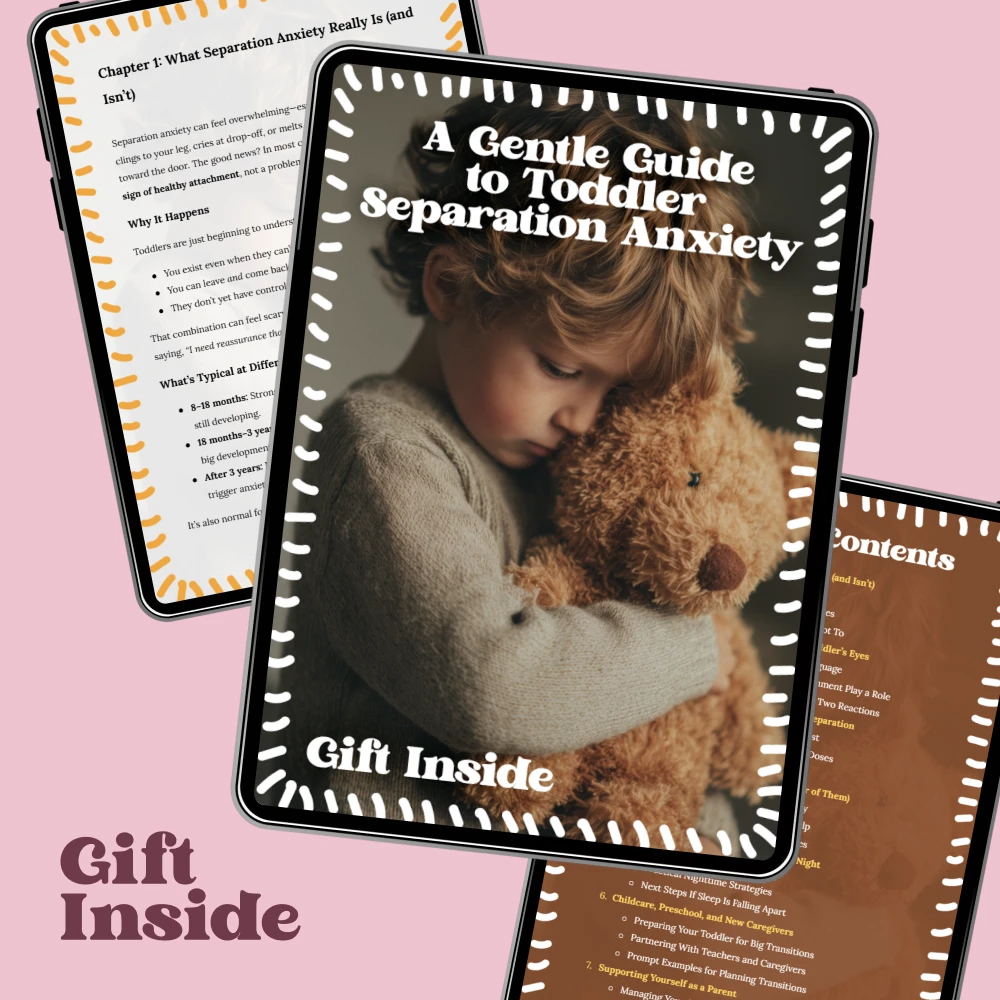
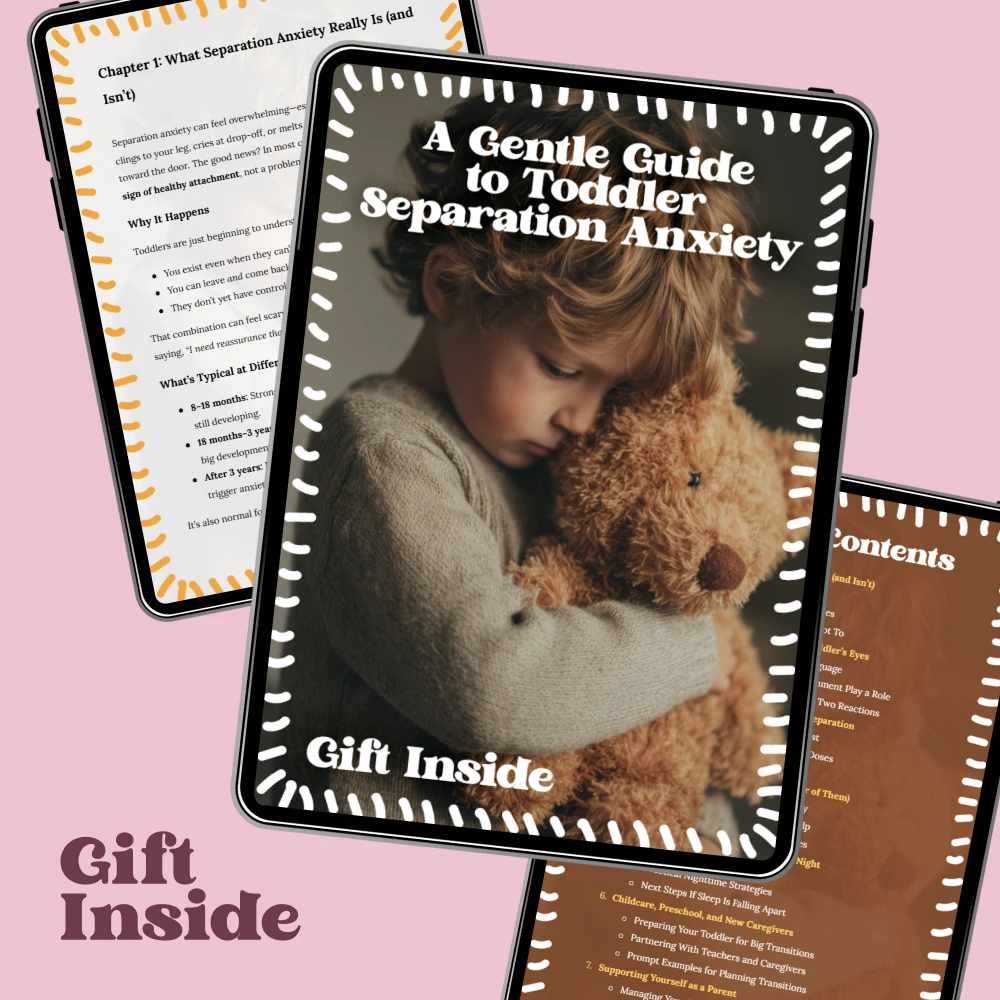
A Gentle Guide to Toddler Separation Anxiety – Calm Goodbyes, Secure Attachment & How to Manage Toddler Separation Anxiety | Parenting eBook
View product
Read the Pattern, Not Just the Tears
Common signs include crying, clinging, reaching for a caregiver, resisting childcare, following a parent between rooms, and struggling to settle with another trusted adult. Bedtime resistance, repeated reassurance seeking, temporary sleep disruption, physical complaints before leaving, or distress well before departure can be less obvious signs.
Notice when the reaction begins, how long it lasts, where it is strongest, and what helps recovery . Developmentally common protest often eases after departure. Closer attention may be useful when distress remains intense across settings or substantially disrupts sleep, childcare, family routines, or age-appropriate activities.
Put the Routine Into Words
A simple sequence might sound like this: “Grandma will stay with you, and I’ll return after lunch. You wish I could stay. You are safe with Grandma. I love you. See you after lunch.”
Keep your body language warm and confident. Avoid slipping away unnoticed, which may increase vigilance during future transitions. Repeatedly restarting a long goodbye can also amplify anticipation. Practice manageable separations at home and increase the time apart gradually when your toddler is coping comfortably.
Check the listed dimensions for put the routine into words against the available vehicle space before use.
Secure Attachment Includes Reconnection
Secure attachment develops through repeated experiences of responsive care, comfort, appropriate boundaries, and reliable reconnection—not through the absence of tears. When practical, offer a few minutes of undistracted attention before a transition without creating a lengthy buildup.
At reunion, reconnect with affection and attention rather than immediately asking whether the child cried. Emotion coaching can link the difficult moment to a dependable outcome: “Goodbye felt hard, and I came back after snack just like I said.”
Comfort Objects Can Support the Routine
A small family photo, familiar blanket, approved soft toy, or short goodbye song may create continuity between home and childcare. A pacifier may soothe a toddler who already uses one, but it cannot replace predictable caregiver behavior or resolve the transition by itself.
Confirm childcare rules and follow age-appropriate sleep-safety and dental guidance. Pair any comfort object with the same calm routine so the toddler experiences separation as something that ends in reliable reunion.
A Focused Resource for Everyday Transitions
A Gentle Guide to Toddler Separation Anxiety is a digital companion focused on calm goodbyes, secure-attachment support, and manageable responses to everyday distress.
Written resources are most useful when paired with observations about the individual child’s temperament, routines, and care environment.
When Extra Support May Be Helpful
Consult a pediatrician or qualified child-development or mental-health professional if anxiety is severe, worsening, prolonged, or substantially interfering with sleep, childcare, family routines, or age-appropriate activities. Frequent physical symptoms, regression alongside other concerns, or a prolonged inability to recover with a trusted adult are additional reasons to seek guidance.
Ask childcare providers what they observe after departure and collaborate on a consistent response plan. General educational resources cannot replace an individualized medical, developmental, or mental-health assessment.
Check the listed dimensions for when extra support may be helpful against the available vehicle space before use.
Compare related options such as Gap Insurance Uncovered: Your Ultimate Guide to Understanding Gap Insurance & Whether You Need It to match features, dimensions, and use case before choosing.
FAQ
How long does 2 year old separation anxiety last?
There is no fixed timeline. Episodes may come and go during developmental changes or stressful transitions, but professional guidance is appropriate when distress is prolonged, worsening, or disruptive.
What age is hardest for separation anxiety?
Separation anxiety commonly becomes noticeable in infancy and can remain intense during toddlerhood, although there is no single hardest age for every child. Temperament, development, and life changes influence its timing.
Does pacifier help with separation anxiety?
A pacifier may soothe a toddler who already uses one, but it is not a complete solution. Combine it with predictable goodbyes and reliable reunions while following safety and dental guidance.
See if A Gentle Guide to Toddler Separation Anxiety – Calm Goodbyes, Secure Attachment & How to Manage Toddler Separation Anxiety | Parenting eBook fits your setup
View product









Leave a comment